When should the first visit be?
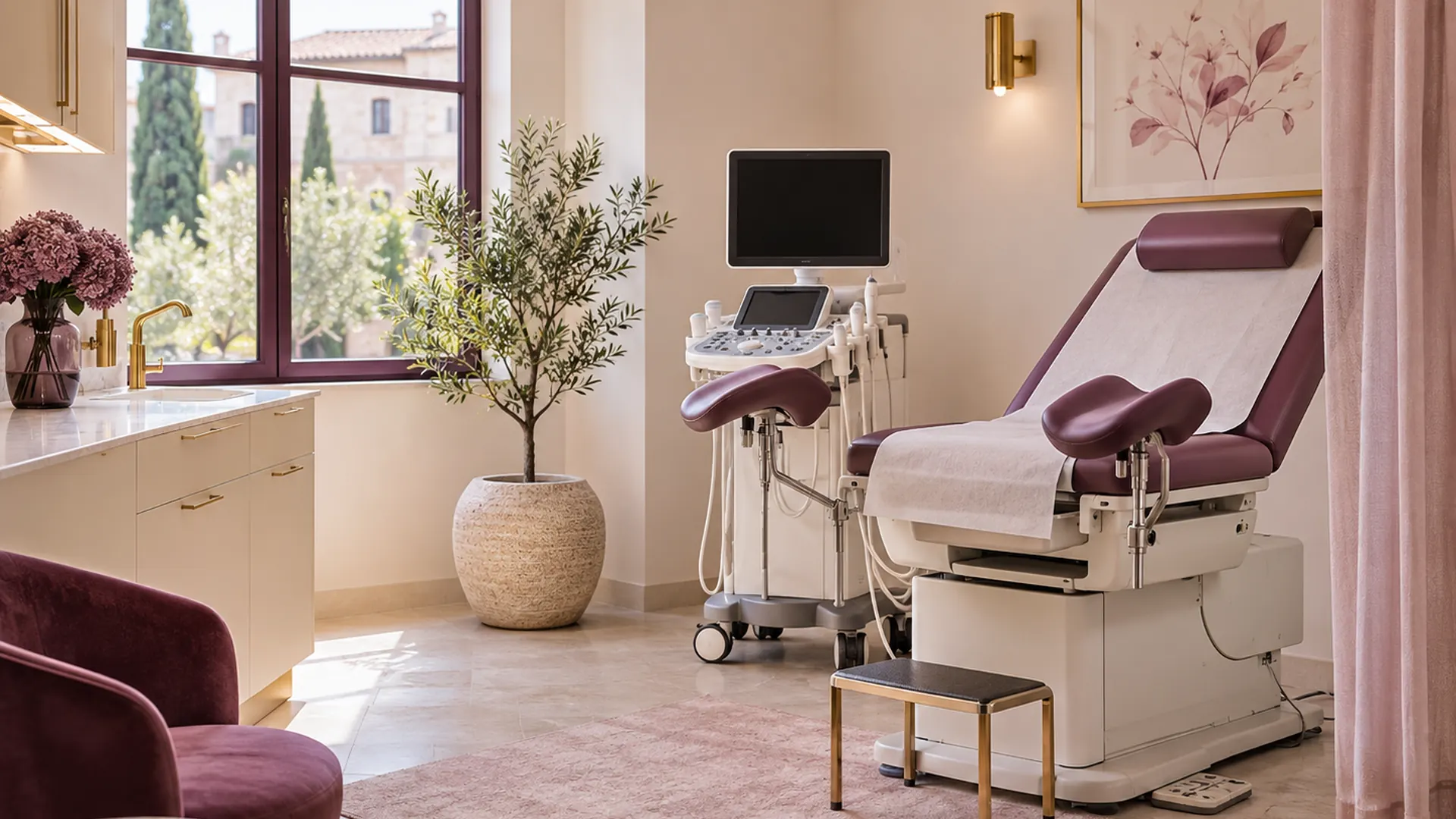
You are advised to come for an examination when a home pregnancy test is positive or your period is late. At the first visit, an ultrasound checks whether the pregnancy is inside the womb and how many weeks it is; in the very early weeks the image may not yet be clear, in which case a check is planned shortly afterwards.
At this appointment your past illnesses, the medicines you take and any previous pregnancies are discussed, and the necessary tests are requested.
Check-ups throughout pregnancy
At check-ups, the mother’s blood pressure, weight and general condition are checked, and the baby’s development is followed by ultrasound. The intervals between check-ups depend on the week of pregnancy and on your and your baby’s condition; in the last weeks they usually become more frequent.
Screening tests
Some screening tests in pregnancy are done at specific weeks. The quadruple screening test is one of them and gives a risk calculation for certain chromosomal differences in the baby. Screening tests do not give a definite diagnosis; if the result shows a higher risk, options for further assessment are discussed.
Which test is done at which week will be explained to you separately at the appointment.
Vaginal birth and caesarean section
If there is no medical obstacle, vaginal birth is usually discussed as the first option. A caesarean section may come into question for reasons such as the baby’s position, previous births, or the health of the mother or baby. The decision is made together with you, according to how the pregnancy is going.
In a vaginal birth, an episiotomy (a cut made at birth) may be performed if it is considered necessary; this too is discussed beforehand.
Pregnancy loss and sensitive times
Bleeding, pelvic pain or suspected miscarriage in early pregnancy always needs assessment. At this stage the situation is clarified with an examination and ultrasound; if needed, procedures such as dilatation and curettage are discussed. In such a situation the process is explained openly so that you do not feel alone.
When to contact your doctor straight away during pregnancy
- Vaginal bleeding or a gush of fluid.
- Abdominal or pelvic pain that does not go away or keeps getting worse.
- Severe headache, disturbed vision, sudden swelling of the face and hands.
- High fever, or vomiting so severe that you cannot keep food and fluids down.
- A marked decrease in the baby’s movements in the later weeks.
- Regular, increasingly frequent contractions before your due date.
- Do not take medicines without asking your doctor; tell them about any medicines you take at the first visit.
This list is general information; in an emergency, go to the nearest healthcare facility. The personal advice given to you takes priority.
The information on this page is for general guidance only; an examination is needed for diagnosis and treatment. Every person’s situation is different.